
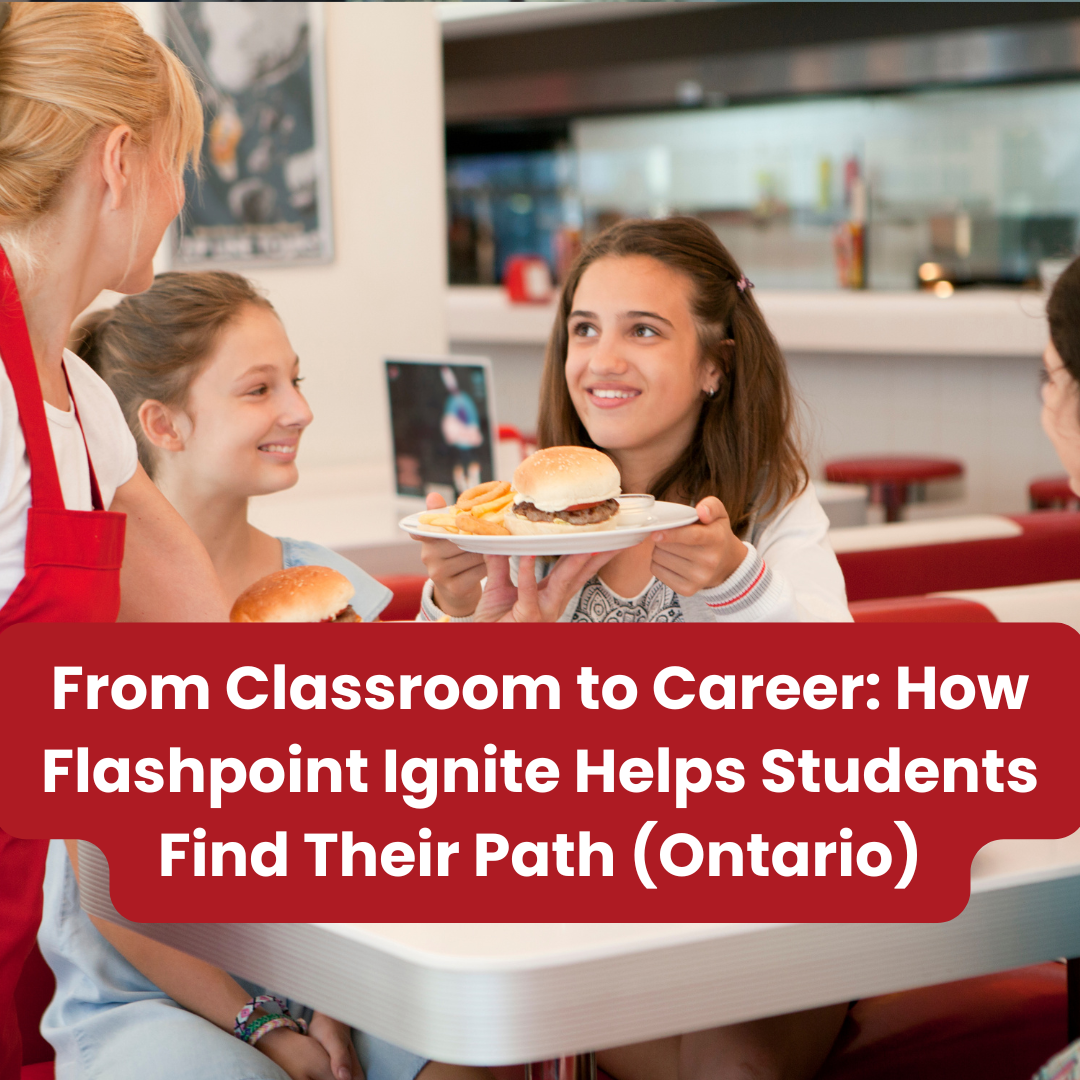
For many teens, the biggest stress isn’t homework—it’s the future. By Grade 10 and 11, Ontario students are often expected to make decisions that feel huge, and it can feel like everyone is waiting for them to have a clear answer. What should they take in school? What should they do after graduation? What kind of job would they even enjoy?
Teens are constantly asked questions like:
- Which courses should I take?
- Should I go to college or university?
- What job would I even want?
- What if I choose wrong?
The truth is, most teens don’t know exactly what they want yet—and that’s completely normal. Career clarity isn’t something that magically appears overnight. It’s something students build through exposure, practice, and real experiences over time.
That’s why programs like Flashpoint Ignite are so valuable. They help teens bridge the gap between school and real life by building skills, confidence, and direction in a way that feels practical, supportive, and motivating. Instead of expecting students to “figure it out” alone, Ignite gives them opportunities to explore what they’re good at, what they enjoy, and what kinds of careers might fit them best.
The Problem: School Doesn’t Always Show the “Why”
Ontario schools teach important subjects, but many students still struggle with motivation because they don’t always see how what they’re learning connects to real life. When teens can’t see the purpose, it’s easy to feel disconnected from school—even if they’re capable and intelligent.
Many students quietly wonder:
- “When will I use this?”
- “How does this connect to a career?”
- “What am I even working toward?”
When those questions go unanswered, motivation drops. Teens may start doing the minimum, procrastinating more, or feeling stressed because they don’t know what the “point” is. And when students feel uncertain about their future, that uncertainty can spill into school performance, confidence, and mental well-being.
Flashpoint Ignite helps solve that by connecting learning to real-world outcomes. When teens understand how skills apply outside the classroom, they often return to school with stronger focus and a clearer sense of purpose. Instead of learning for grades alone, they start learning with a goal in mind—whether that goal is a first job, a leadership role, a co-op placement, or simply becoming more confident and capable.
Why “Finding Your Path” Isn’t a One-Time Decision
A lot of teens feel pressure to choose one perfect career and commit to it forever. But real life doesn’t work that way.
Most people don’t follow a straight line from high school to one job for the rest of their lives. Instead, they explore, learn, adjust, and grow. The key isn’t choosing perfectly—it’s building the skills and confidence to make good decisions as new opportunities appear.
That’s what Flashpoint Ignite supports. It doesn’t force teens to lock into one career. It helps them develop the mindset and skills that make it easier to explore and adapt.
A teen who builds career readiness early is more likely to:
- feel confident trying new opportunities
- speak up and ask questions
- learn faster in new environments
- bounce back from setbacks
- make decisions with less fear
Those abilities matter in every future pathway.
Career Exploration Without Pressure
One of the best things about Flashpoint Ignite is that it allows teens to explore careers without feeling trapped or forced into one “perfect” path. Instead of pressuring students to choose a single direction right away, Ignite supports exploration through hands-on learning and skill-building that helps teens discover what they enjoy and what they’re naturally good at.
Students gain clarity through:
- Hands-on learning
- Skill development
- Teamwork and leadership experiences
- Exposure to future-focused topics
Teens learn by doing—and that’s how real confidence and career direction are built.
This matters because many students don’t truly know what they like until they’ve tried something in a real setting. A teen might think they’re not “a leader,” but then realize they thrive when working with a team. Another teen might assume they aren’t good at professional communication, but quickly improve once they’re given the chance to practice in a supportive environment.
Exploration builds self-awareness, and self-awareness builds better choices.
How Ignite Builds Real Career Readiness (Not Just Career Ideas)
Career readiness isn’t just knowing job titles. It’s having skills that apply across careers and help teens succeed in school, work, and future opportunities. Flashpoint Ignite focuses on building foundational strengths that students can use no matter what they choose later.
Ignite helps students develop:
- Communication
- Confidence
- Leadership
- Teamwork
- Problem-solving
- Workplace awareness
These skills matter whether a teen chooses:
- Trades
- College
- University
- Entrepreneurship
- Tech careers
- Sports leadership
When students build these transferable skills early, they feel more capable and prepared—because they’re not relying on guesswork. They’re building real tools they can take anywhere.
Let’s break down why each one matters so much.
Communication: The Skill That Unlocks Opportunities
Communication is one of the biggest predictors of success in both school and work. It impacts everything from presentations and interviews to teamwork and leadership.
Ignite helps teens practice communication by learning how to:
- explain their ideas clearly
- listen and respond respectfully
- ask better questions
- share feedback without conflict
- speak with confidence in group settings
For teens who struggle with speaking up, this is often one of the most noticeable growth areas. Communication practice makes future challenges—like interviews or presentations—feel less scary.
Teamwork: Learning How to Work With Real People
Teamwork isn’t just “working in a group.” It’s learning how to function with different personalities, different strengths, and different communication styles.
Ignite supports teamwork skills by helping teens learn to:
- collaborate toward a shared goal
- contribute consistently (not just at the end)
- solve problems together
- handle disagreements respectfully
- support others while staying accountable
These are the exact teamwork skills employers look for in part-time hires and future interns. They’re also the skills that help teens succeed in group projects and leadership roles at school.
Leadership: Becoming Reliable, Not Just “In Charge”
Many teens think leadership means being the loudest or most confident person in the room. But real leadership is about responsibility and follow-through.
Ignite helps teens develop leadership by learning how to:
- take initiative when something needs to be done
- organize tasks and manage priorities
- motivate and include others
- stay calm under pressure
- take accountability when mistakes happen
Leadership skills matter whether a teen becomes a team captain, a student council member, a shift leader at a part-time job, or simply someone who can be trusted.
Problem-Solving: Confidence Comes From Learning How to Think
One of the biggest reasons teens feel stuck is because they don’t know what to do when they face a challenge. Problem-solving skills change that.
Ignite helps students build structured problem-solving habits like:
- breaking big problems into smaller steps
- asking “what’s the goal?” before rushing
- testing solutions and adjusting
- learning from mistakes without shutting down
- staying persistent when something is difficult
These habits build real confidence because teens stop relying on “luck” and start relying on a process.
Workplace Awareness: Understanding How the Real World Works
Many teens feel anxious about their first job because they don’t know what employers expect. Workplace awareness removes that fear by teaching students the basics of professional expectations.
Teens learn about:
- punctuality and consistency
- communication with supervisors
- teamwork in a workplace setting
- how to take feedback professionally
- responsibility and reliability
These skills help teens succeed not only in jobs, but also in volunteer roles, co-op placements, and leadership opportunities.
Confidence Through Competence: The Most Important Outcome
Confidence is often the biggest transformation students experience in a strong summer program. But confidence doesn’t come from hype—it comes from progress.
As teens practice skills, complete challenges, and improve over time, they gain proof that they can:
- learn new things
- adapt to new environments
- contribute to a team
- handle responsibility
- speak up and lead
That’s the kind of confidence that sticks. It shows up in school, in interviews, in relationships, and in future opportunities.
What Parents Notice After Ignite
Parents often notice changes like:
- stronger communication at home
- more maturity and independence
- increased motivation and goal-setting
- improved resilience after setbacks
- more willingness to try new things
These are the kinds of results that matter long-term, because they support a teen’s growth beyond just one summer.
Final Thoughts
Career direction doesn’t come from guessing. It comes from experience.
Flashpoint Ignite helps Ontario teens build skills and confidence that guide them toward their future—without pressure, and with real support along the way. It gives students the opportunity to explore what they enjoy, develop real-world readiness, and return to school feeling stronger, clearer, and more capable.
Flashpoint Ignite students don’t just leave with new skills and confidence—they also leave with proof of their growth. Every student receives a Certificate of Completion, which recognizes their participation, effort, and the skills they’ve developed throughout the program. In addition, students can earn a Letter of Recommendation, which can be a huge advantage when applying for part-time jobs, volunteer roles, leadership opportunities, or future programs. These documents help teens stand out by giving them something tangible to include in applications, and they also help students communicate their experience more professionally—especially if it’s one of their first structured career-development programs. For many teens, having an official certificate and recommendation letter boosts motivation, builds confidence, and gives them a strong head start when they’re ready to take the next step.