Helping Your Clients Navigate the New Hiring Reality
Many young people and our clients spend years building skills, earning certifications, and preparing for careers. Yet today, getting hired often involves more than simply being qualified.
Before a hiring manager ever reviews an application, candidates may encounter a series of digital gatekeepers. Applicant Tracking Systems (ATS), AI-powered résumé screening tools, automated assessments, and video interview platforms are increasingly being used to streamline recruitment. While these technologies help employers manage large volumes of applications, they can also create unexpected barriers for job seekers.
A qualified candidate may be overlooked because their résumé isn’t optimized for an ATS. Another may struggle with an AI-assisted video interview simply because they’ve never encountered one before. In many cases, students are being evaluated by technology before they have an opportunity to demonstrate their skills and personality to a real person.
This shift has changed what career readiness looks like.
Traditional job search skills such as résumé writing, interviewing, and networking remain important. However, students also need to understand how modern recruitment technology works and how to navigate it effectively. Knowing how to tailor a résumé, optimize a LinkedIn profile, prepare for virtual interviews, and communicate skills clearly has become increasingly valuable.
As educators and trainers continue to prepare students and clients for life , it is important to recognize that the hiring process itself has evolved. Helping job-seekers understand the realities of modern recruitment can improve confidence, increase opportunities, and better prepare them for the workforce they are entering.
At Flashpoint Training, we’ve seen growing interest in career-readiness programming that addresses these emerging challenges. Through workshops focused on interview skills, professional branding, and navigating technology-driven hiring processes, students gain practical insights that complement the skills they are already developing in the classroom.
Because in today’s job market, success isn’t just about having the right qualifications—it’s also about ensuring those qualifications get noticed.
In an era where artificial intelligence screens resumes, LinkedIn profiles double as living CVs, and job applications can be submitted in a matter of clicks, it’s fair to ask: are cover letters still worth the effort? For many job seekers, the cover letter feels like an outdated relic—time-consuming, repetitive, and often unread. Yet, despite the rise of automation, cover letters haven’t disappeared. In fact, their role is evolving rather than fading.
The short answer: yes, cover letters are still relevant—but not in the way they used to be.
The Shift from Formality to Strategy
Traditionally, cover letters were formal summaries of your resume. They reiterated your experience, expressed polite enthusiasm, and followed a predictable structure. In today’s hiring landscape, that approach is largely ineffective. Recruiters don’t need a rehash of your resume—they already have tools (and AI systems) that scan and summarize that information instantly.
What they don’t get from a resume is context: why you’re interested, how you think, and what makes you a strong fit beyond keywords. That’s where a modern cover letter still has value. It’s less about repeating credentials and more about telling a focused, strategic story.
AI Has Changed the Game—But Not Eliminated the Need
AI-powered applicant tracking systems (ATS) have reshaped how resumes are filtered. They prioritize keywords, formatting, and relevance at scale. Cover letters, on the other hand, are less consistently parsed or required—but they can still influence human decision-making once you pass that initial filter.
Ironically, AI has made differentiation more important. When hundreds of candidates can generate polished resumes (and even AI-written cover letters), hiring managers are increasingly looking for signals of authenticity and intent. A thoughtful, well-crafted cover letter can provide that—if it feels human and specific.
That said, generic or obviously AI-generated cover letters often do more harm than good. Recruiters can spot them quickly, and they tend to blur into the noise. The bar isn’t just writing one—it’s writing one that actually says something meaningful.
When Cover Letters Matter Most
Not every job application requires a cover letter, and in some cases, they may not be read at all. However, there are situations where they can make a significant difference:
Career changes: If you’re pivoting industries or roles, a cover letter helps explain your motivation and transferable skills.
Competitive roles: In high-demand positions, small differentiators matter. A strong narrative can help you stand out.
Smaller companies or startups: These employers often value personality, initiative, and cultural fit—things a resume can’t fully capture.
When explicitly requested: If a job posting asks for a cover letter, skipping it can signal lack of effort or attention to detail.
In these contexts, the cover letter becomes less of a formality and more of a strategic tool.
The Rise of Alternatives
It’s also worth noting that traditional cover letters are no longer the only way to achieve their purpose. Many candidates are experimenting with alternative formats, such as:
Short email introductions instead of formal letters
Portfolio websites with personalized “about” sections
Video introductions or Loom recordings
Thoughtful LinkedIn messages when applying through networks
These formats often feel more natural and can be more engaging than a standard one-page letter. What matters is not the format itself, but the ability to communicate clearly and authentically.
Quality Over Obligation
One of the biggest misconceptions about cover letters is that they are always necessary. In reality, a weak or generic cover letter can hurt your application more than help it. Phrases like “I am writing to express my interest…” or vague statements about being a “hardworking team player” add little value.
If you’re going to include a cover letter, it should answer questions your resume cannot:
Why this role, specifically?
Why this company?
What unique perspective or experience do you bring?
How do your skills translate into impact?
If you can’t answer those questions in a compelling way, it may be better to focus your energy elsewhere—such as tailoring your resume or networking.
The Human Element Still Matters
Despite increasing automation, hiring is still a human decision. At some point in the process, a person—not an algorithm—decides who to interview and who to hire. Cover letters, when done well, speak directly to that human element.
They can convey tone, curiosity, and motivation. They can show that you’ve done your homework. They can demonstrate communication skills in a way bullet points cannot. In a stack of similar resumes, that can be enough to tip the scales.
So, Are They Worth It?
The relevance of cover letters today comes down to intentionality. They are no longer a default requirement for every job application, but they remain a powerful tool when used thoughtfully.
Instead of asking, “Do I need a cover letter?” a better question is, “Can a cover letter meaningfully strengthen my application here?” If the answer is yes, it’s worth the effort. If not, your time might be better spent networking, refining your resume, or preparing for interviews.
Final Thoughts
The age of AI hasn’t killed the cover letter—it has forced it to evolve. What once was a routine formality is now an opportunity for differentiation. In a world where automation handles the basics, the value of human nuance has only increased.
A strong cover letter won’t guarantee you a job. But in the right context, it can still open doors—and in a competitive job market, that’s often all you need.
There’s a moment many parents recognize: your child lands their first interview… and then panic sets in.
“How am I supposed to answer these questions? I’ve never even had a job.”
It’s a fair concern—but here’s the truth most people don’t realize:
Employers hiring teens are not expecting experience. They’re looking for potential.
The real challenge isn’t a lack of experience—it’s not knowing how to talk about what you already have.
Shift the Mindset First
Before worrying about specific answers, help your child understand this:
An interview is not a test of past jobs—it’s a conversation about who you are and how you think.
Employers are asking:
Can this person communicate?
Are they responsible?
Do they show initiative?
Will they be reliable?
None of those require a previous job.
The Secret: Translate Life Into Experience
Your child does have experience—they just don’t recognize it yet.
Help them reframe everyday activities into interview-ready examples:
Real Life Experience
How to Frame It
School projects
“I worked in a team and met deadlines”
Sports
“I learned discipline and teamwork”
Volunteering
“I developed responsibility and communication skills”
Babysitting siblings
“I managed responsibility and problem-solving”
Clubs or extracurriculars
“I took initiative and contributed to a group goal”
The goal is simple: 👉 Show skills, not job titles
Common Interview Questions (and How to Approach Them)
1. “Tell me about yourself”
This is where most teens freeze.
Instead of listing random facts, guide them to structure it like this:
Present → Strengths → Interest in the role
Example:
“I’m a high school student who enjoys working with people and being part of a team. I’ve been involved in school clubs and group projects where I’ve learned how to communicate and stay organized. I’m really interested in this role because I want to build real-world experience and contribute to a team.”
2. “Why do you want this job?”
They don’t need a deep passion for retail or food service.
They just need to show intention.
Example:
“I’m looking to gain experience, learn how a workplace operates, and build skills like communication and responsibility. I also enjoy working with people, which is why this role stood out to me.”
3. “Tell me about a time you handled a challenge”
No job? No problem.
Use school or life situations.
Example:
“During a group project, one team member wasn’t contributing much. I stepped in to help organize tasks and communicated with the group to make sure we stayed on track. We ended up finishing successfully.”
This shows:
Initiative
Problem-solving
Leadership
4. “What are your strengths?”
Encourage them to pick real, observable traits:
Reliable
Organized
Good communicator
Positive attitude
Example:
“One of my strengths is being reliable. I make sure I meet deadlines and follow through on what I commit to, especially in school projects and team activities.”
5. “What is a weakness?”
This isn’t about exposing flaws—it’s about showing self-awareness.
Example:
“I sometimes get nervous speaking in front of groups, but I’ve been working on it by participating more in class and volunteering to present.”
What Parents Can Do to Help
You don’t need to have all the answers—you just need to guide the process.
✔ Practice out loud
Mock interviews build confidence fast.
✔ Help them find examples
Ask:
“When have you worked with others?”
“When have you solved a problem?”
✔ Focus on confidence, not perfection
Employers remember how someone felt in the interview more than exact wording.
Final Thought
Your child doesn’t need a resume full of jobs to succeed in an interview.
They need:
A few solid examples
A clear way to talk about themselves
The confidence to show up and try
Because at the end of the day:
The first job isn’t about proving experience—it’s about showing potential.
And that’s something every student already has.
By Carmen Reis, CPAm, MA
Carmen is the CEO of Flashpoint Ignite and Flashpoint Training. You can reach Carmen at carmen@flashpointtraining.com.
For decades, the resume has been the starting point.
Before the interview. Before the conversation. Before any real interaction — there was the document. One page, sometimes two, meant to represent who you are, what you’ve done, and why you should be chosen.
Students are still told it’s essential. Teachers still spend time helping them build one. Employers still ask for it.
But something is shifting.
Quietly, and in some cases quickly, the resume is losing its role as the most important part of the hiring process.
Not disappearing entirely — but becoming less reliable as a signal of real capability.
And AI is accelerating that shift.
The Resume Was Never Designed for This
The traditional resume was built for a slower, simpler hiring process.
Fewer applicants. More time to review. More emphasis on written summaries of experience.
Today, that environment no longer exists.
Employers are sorting through hundreds — sometimes thousands — of applications. AI systems scan resumes before a human ever sees them. And students now have access to tools that can generate polished, professional-sounding resumes in seconds.
The result is a strange situation:
Resumes are easier to produce than ever — and harder to trust.
When Everyone Sounds Qualified, No One Stands Out
AI has flattened the language of resumes.
Students who struggle to describe their experience can now generate strong-sounding bullet points instantly. Phrases like “demonstrated leadership,” “collaborated effectively,” and “developed strong communication skills” appear everywhere.
The problem is not that these statements are false. The problem is that they are indistinguishable.
When every resume sounds polished, structured, and “correct,” it becomes difficult to tell who actually understands what they’ve written — and who simply used a tool.
From an employer’s perspective, this creates a credibility gap.
They are no longer asking: “Is this resume well-written?”
They are asking: “Is this real?”
The Resume Is Becoming a Starting Filter — Not a Decision Tool
AI hasn’t removed the resume from the hiring process. It has changed its role.
Instead of being the primary tool for evaluating candidates, the resume is increasingly used to:
filter applications
check for basic alignment
determine who moves forward
But it rarely answers the most important question:
Can this person actually do the job?
That question is now being answered elsewhere — in interviews, in assessments, in conversations, and in real-time demonstrations of skill.
The resume gets students into the process. It doesn’t carry them through it.
What This Means for Students
For students, this shift is both challenging and freeing.
Challenging, because a strong resume is no longer enough to stand out.
Freeing, because they don’t need a perfect resume to succeed.
What matters more now is:
how they communicate
how they think
how they respond in real situations
how they explain their own experience
In other words, the focus is moving away from how well students can write about themselves and toward how well they can represent themselves.
Why Experience Is Starting to Matter More Than Description
As resumes become easier to generate, actual experience becomes more valuable.
Not just having experience — but being able to talk about it clearly.
Students who can say:
what they did
what they learned
what challenged them
how they responded
have a significant advantage over those who rely on generic statements.
Because in a conversation, there is no template.
And that’s where authenticity shows.
The Risk of Over-Reliance on AI
AI can help students write resumes. It can improve wording, suggest structure, and make documents look polished.
But it also introduces a risk.
When students rely too heavily on AI-generated content, they can lose connection to what they’ve written. They may not be able to explain their own experiences in detail. They may struggle to answer follow-up questions.
The resume becomes something they submitted — not something they understand.
And that gap becomes obvious quickly in an interview.
So Is the Resume Still Relevant?
The answer is yes — but not in the way it used to be.
The resume still matters because:
it gets students through initial screening
it shows basic organization and effort
it signals alignment with a role
But it is no longer the most important part of the process.
It is one piece — and a limited one.
The real evaluation happens after.
What We Focus On Instead at Ignite
At Ignite, we don’t treat the resume as the main event.
We treat it as a tool — useful, but incomplete.
What we focus on is helping students:
understand their own experiences
communicate clearly and confidently
respond to questions in real time
make connections between what they’ve done and what they can do
Because those are the skills that carry forward — beyond the document.
Students still leave with strong resumes. But more importantly, they leave with the ability to stand behind what’s on them.
Final Thought
The resume isn’t disappearing. But it is losing its power as the primary measure of readiness.
In a world where anyone can generate a polished document, what stands out is no longer how well something is written.
It’s how well it holds up when a real conversation begins.
For students, that’s the shift that matters.
Not just having a resume — but being able to go beyond it.
By Carmen Reis, CPA,MA
If you want to reach out to Carmen, email Carmen@flashpointtraining.com
When people think about “careers in sport,” they often picture professional athletes. It makes sense—athletes are the most visible part of the sports world. But the truth is, sport is a massive ecosystem filled with leadership opportunities, career pathways, and real-world skills that extend far beyond playing on the court or field. For teens across Ontario, sport can be much more than a hobby. It can be a foundation for confidence, community involvement, and future career success. Whether a teen dreams of working in sport one day or simply loves being part of a team, sport is one of the best environments to build transferable skills. It teaches young people how to collaborate, stay disciplined, manage pressure, and bounce back after setbacks. And those skills don’t just help in sport—they help in school, part-time jobs, volunteering, and any future career path. At Flashpoint Ignite, leadership-driven learning helps teens recognize the real value of what sport teaches them. Even more importantly, students learn how to apply those skills in professional and academic environments. That means sport becomes more than something they do—it becomes something they can build from.
Sport Builds Real Leadership (Even When Teens Don’t Notice It)
Many teens are already developing leadership skills through sport, even if they don’t describe themselves as “leaders.” Leadership isn’t only about being the captain or the loudest voice in the room. Real leadership is often quiet, consistent, and earned over time. It shows up in habits, attitude, and reliability. In sport, leadership often looks like:
Showing up consistently
Being coachable
Supporting teammates
Managing emotions under pressure
Recovering after losses
Staying focused during challenges
Those are leadership behaviours that employers and educators respect. The key is learning how to translate them into language that makes sense outside of sport. When teens learn to explain their sports experience as real leadership development, they become stronger candidates for jobs, scholarships, programs, and volunteer roles. For example, a teen who trains consistently isn’t just “committed to practice.” They are demonstrating reliability, discipline, and time management. A teen who stays calm under pressure isn’t just “good in a close game.” They’re showing emotional control and decision-making skills. These are career skills in disguise.
Careers in Sport: More Than Playing
Sport careers don’t begin and end with becoming an athlete. The sports industry includes countless roles that require leadership, organization, communication, and strategic thinking. Many of these pathways are accessible to teens through early exploration, volunteering, and skill-building programs. Careers in sport can include:
Coaching and development
Athletic training / kinesiology pathways
Sport management and operations
Event planning and facility management
Sport marketing and media
Recreation leadership and community programming
Fitness and wellness industries In Toronto, the sport industry can be larger-scale, with major events, sport marketing, media opportunities, and management roles connected to high-level organizations. In London, community sport and recreation pathways can be especially accessible for teens to explore early, including coaching, volunteering, program leadership, and youth sport development. The biggest advantage for teens is that sport careers are built on skills they can start developing now. Teens don’t need to wait until post-secondary to begin learning how sport organizations work. They can begin building experience and leadership through camps, training environments, volunteering, and community involvement.
Transferable Skills Sport Teaches (That Employers Love)
Sport is one of the best real-life training grounds for skills that employers consistently look for. These aren’t just “soft skills.” They are essential skills that determine how well someone performs in a workplace, a team environment, or a leadership role.
1) Teamwork Under Pressure
Sport teaches teamwork when the outcome matters. When you’re part of a team, you learn quickly that success isn’t just about individual performance—it’s about communication, coordination, and trust. Teens learn how to contribute even when they’re tired, stressed, or under pressure, and that ability translates directly into workplace environments. Employers value people who can cooperate even when things aren’t easy. Sport teaches teens how to stay focused on the goal, not the drama, and how to keep showing up even when challenges arise.
2) Communication
Communication in sport is constant. Teens learn to listen to coaches, respond to feedback, call plays, adjust strategy, and communicate with teammates quickly and clearly. This kind of communication isn’t theoretical—it’s practical and real-time. That’s exactly what workplace communication requires. Teens who learn to communicate in sport often find it easier to speak up at work, ask questions, clarify expectations, and handle team dynamics professionally.
3) Discipline and Habit-Building
One of the strongest advantages sport gives teens is discipline. Training schedules, improvement plans, repetition, and commitment all build habits that create success over time. Sport teaches teens that progress isn’t instant—it comes from consistency. That mindset transfers into school success, job success, and long-term career development. Employers love teens who show up consistently, follow through, and understand that effort over time produces results.
4) Resilience and Recovery
Every athlete experiences setbacks: missed shots, losses, injuries, bad games, and moments of frustration. Sport teaches teens how to recover without giving up. That resilience becomes one of the most valuable skills a teen can develop. In real life, resilience helps teens handle:
School stress and setbacks
Job rejections
Feedback and criticism
Pressure during interviews
Conflict in group settings A teen who can bounce back quickly is a teen who can grow quickly.
5) Leadership Through Example
The strongest leaders aren’t always the loudest. In sport, leadership is often shown through consistency, effort, and accountability. Captains and leaders are trusted because they show up, stay focused, and hold themselves to a standard. That kind of leadership is exactly what employers trust. It’s the kind of leadership that turns a teen into someone who gets promoted, relied on, and recommended for opportunities.
Why We have a Leadership in Sport Program
Flashpoint Ignite’s Leadership & Careers in Sport program is built for teens who love sport and want to turn that passion into real-world skills and future opportunities.
Not every student can play professionally.
Through a mix of hands-on activities, guided career exploration, and leadership development, students learn what it actually takes to succeed in sport-related pathways beyond being an athlete. Participants build key skills like communication, teamwork, professionalism, and confidence while exploring careers such as coaching, sport management, event leadership, fitness and wellness, and community recreation. Most importantly, the program helps teens understand how to translate their sport experience into career-ready strengths—so they leave with greater direction, stronger leadership habits, and a clearer picture of how sport can connect to their future.
This program is for kids who:
Love sports and want to build confidence on and off the court/field
Want to learn leadership skills like teamwork, communication, and responsibility
Are curious about sport careers beyond being an athlete (coaching, training, management, etc.)
Want to improve their mindset, discipline, and ability to handle challenges
Are ready to try new things, participate, and grow in a supportive environment
Programs like Flashpoint Ignite can provide the structured environment teens need to develop leadership and professionalism alongside sport interest. That structure matters because it helps teens practice skills intentionally, not accidentally. Instead of simply participating in sport, teens begin understanding how sport builds real-world readiness.
Why This Matters for Teen Confidence
Sport already gives teens identity and community. It’s often where they feel motivated, connected, and challenged in a healthy way. But confidence grows even more when teens realize that what they’re doing in sport is building real strength for life. When teens learn the “career language” of sport skills, their confidence increases because they realize:
“I have real strengths.”
“I can lead.”
“I can handle pressure.”
“I can work with a team.” That confidence transfers into interviews, school presentations, leadership roles, and future opportunities. It changes the way teens see themselves. They stop thinking of sport as “just a game” and start recognizing it as training for success.
Final Thoughts: Sport Is a Skill-Building Advantage
Sport has always been about more than winning. It teaches teens how to show up, work hard, communicate, and improve over time. When teens learn how to translate those skills into real-world confidence and career readiness, sport becomes a powerful advantage for their future. Whether a teen wants to work in sport professionally or simply wants to build leadership and life skills, the lessons learned through sport are valuable—and they last.
For many teens, the biggest stress isn’t homework—it’s the future. By Grade 10 and 11, Ontario students are often expected to make decisions that feel huge, and it can feel like everyone is waiting for them to have a clear answer. What should they take in school? What should they do after graduation? What kind of job would they even enjoy?
Teens are constantly asked questions like:
Which courses should I take?
Should I go to college or university?
What job would I even want?
What if I choose wrong?
The truth is, most teens don’t know exactly what they want yet—and that’s completely normal. Career clarity isn’t something that magically appears overnight. It’s something students build through exposure, practice, and real experiences over time.
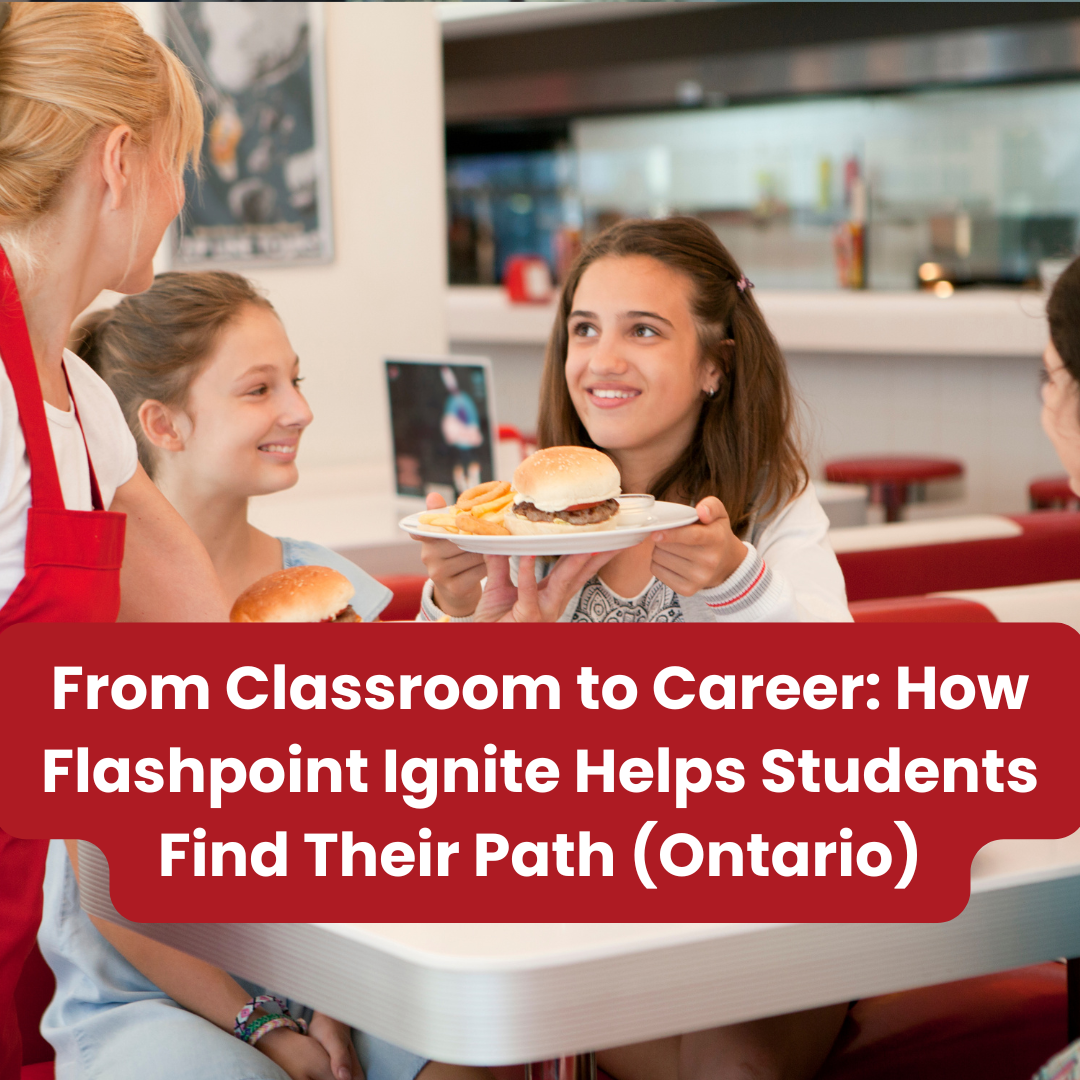
That’s why programs like Flashpoint Ignite are so valuable. They help teens bridge the gap between school and real life by building skills, confidence, and direction in a way that feels practical, supportive, and motivating. Instead of expecting students to “figure it out” alone, Ignite gives them opportunities to explore what they’re good at, what they enjoy, and what kinds of careers might fit them best.
The Problem: School Doesn’t Always Show the “Why”
Ontario schools teach important subjects, but many students still struggle with motivation because they don’t always see how what they’re learning connects to real life. When teens can’t see the purpose, it’s easy to feel disconnected from school—even if they’re capable and intelligent.
Many students quietly wonder:
“When will I use this?”
“How does this connect to a career?”
“What am I even working toward?”
When those questions go unanswered, motivation drops. Teens may start doing the minimum, procrastinating more, or feeling stressed because they don’t know what the “point” is. And when students feel uncertain about their future, that uncertainty can spill into school performance, confidence, and mental well-being.
Flashpoint Ignite helps solve that by connecting learning to real-world outcomes. When teens understand how skills apply outside the classroom, they often return to school with stronger focus and a clearer sense of purpose. Instead of learning for grades alone, they start learning with a goal in mind—whether that goal is a first job, a leadership role, a co-op placement, or simply becoming more confident and capable.
Why “Finding Your Path” Isn’t a One-Time Decision
A lot of teens feel pressure to choose one perfect career and commit to it forever. But real life doesn’t work that way.
Most people don’t follow a straight line from high school to one job for the rest of their lives. Instead, they explore, learn, adjust, and grow. The key isn’t choosing perfectly—it’s building the skills and confidence to make good decisions as new opportunities appear.
That’s what Flashpoint Ignite supports. It doesn’t force teens to lock into one career. It helps them develop the mindset and skills that make it easier to explore and adapt.
A teen who builds career readiness early is more likely to:
feel confident trying new opportunities
speak up and ask questions
learn faster in new environments
bounce back from setbacks
make decisions with less fear
Those abilities matter in every future pathway.
Career Exploration Without Pressure
One of the best things about Flashpoint Ignite is that it allows teens to explore careers without feeling trapped or forced into one “perfect” path. Instead of pressuring students to choose a single direction right away, Ignite supports exploration through hands-on learning and skill-building that helps teens discover what they enjoy and what they’re naturally good at.
Students gain clarity through:
Hands-on learning
Skill development
Teamwork and leadership experiences
Exposure to future-focused topics
Teens learn by doing—and that’s how real confidence and career direction are built.
This matters because many students don’t truly know what they like until they’ve tried something in a real setting. A teen might think they’re not “a leader,” but then realize they thrive when working with a team. Another teen might assume they aren’t good at professional communication, but quickly improve once they’re given the chance to practice in a supportive environment.
Exploration builds self-awareness, and self-awareness builds better choices.
How Ignite Builds Real Career Readiness (Not Just Career Ideas)
Career readiness isn’t just knowing job titles. It’s having skills that apply across careers and help teens succeed in school, work, and future opportunities. Flashpoint Ignite focuses on building foundational strengths that students can use no matter what they choose later.
Ignite helps students develop:
Communication
Confidence
Leadership
Teamwork
Problem-solving
Workplace awareness
These skills matter whether a teen chooses:
Trades
College
University
Entrepreneurship
Tech careers
Sports leadership
When students build these transferable skills early, they feel more capable and prepared—because they’re not relying on guesswork. They’re building real tools they can take anywhere.
Let’s break down why each one matters so much.
Communication: The Skill That Unlocks Opportunities
Communication is one of the biggest predictors of success in both school and work. It impacts everything from presentations and interviews to teamwork and leadership.
Ignite helps teens practice communication by learning how to:
explain their ideas clearly
listen and respond respectfully
ask better questions
share feedback without conflict
speak with confidence in group settings
For teens who struggle with speaking up, this is often one of the most noticeable growth areas. Communication practice makes future challenges—like interviews or presentations—feel less scary.
Teamwork: Learning How to Work With Real People
Teamwork isn’t just “working in a group.” It’s learning how to function with different personalities, different strengths, and different communication styles.
Ignite supports teamwork skills by helping teens learn to:
collaborate toward a shared goal
contribute consistently (not just at the end)
solve problems together
handle disagreements respectfully
support others while staying accountable
These are the exact teamwork skills employers look for in part-time hires and future interns. They’re also the skills that help teens succeed in group projects and leadership roles at school.
Leadership: Becoming Reliable, Not Just “In Charge”
Many teens think leadership means being the loudest or most confident person in the room. But real leadership is about responsibility and follow-through.
Ignite helps teens develop leadership by learning how to:
take initiative when something needs to be done
organize tasks and manage priorities
motivate and include others
stay calm under pressure
take accountability when mistakes happen
Leadership skills matter whether a teen becomes a team captain, a student council member, a shift leader at a part-time job, or simply someone who can be trusted.
Problem-Solving: Confidence Comes From Learning How to Think
One of the biggest reasons teens feel stuck is because they don’t know what to do when they face a challenge. Problem-solving skills change that.
Ignite helps students build structured problem-solving habits like:
breaking big problems into smaller steps
asking “what’s the goal?” before rushing
testing solutions and adjusting
learning from mistakes without shutting down
staying persistent when something is difficult
These habits build real confidence because teens stop relying on “luck” and start relying on a process.
Workplace Awareness: Understanding How the Real World Works
Many teens feel anxious about their first job because they don’t know what employers expect. Workplace awareness removes that fear by teaching students the basics of professional expectations.
Teens learn about:
punctuality and consistency
communication with supervisors
teamwork in a workplace setting
how to take feedback professionally
responsibility and reliability
These skills help teens succeed not only in jobs, but also in volunteer roles, co-op placements, and leadership opportunities.
Confidence Through Competence: The Most Important Outcome
Confidence is often the biggest transformation students experience in a strong summer program. But confidence doesn’t come from hype—it comes from progress.
As teens practice skills, complete challenges, and improve over time, they gain proof that they can:
learn new things
adapt to new environments
contribute to a team
handle responsibility
speak up and lead
That’s the kind of confidence that sticks. It shows up in school, in interviews, in relationships, and in future opportunities.
What Parents Notice After Ignite
Parents often notice changes like:
stronger communication at home
more maturity and independence
increased motivation and goal-setting
improved resilience after setbacks
more willingness to try new things
These are the kinds of results that matter long-term, because they support a teen’s growth beyond just one summer.
Final Thoughts
Career direction doesn’t come from guessing. It comes from experience.
Flashpoint Ignite helps Ontario teens build skills and confidence that guide them toward their future—without pressure, and with real support along the way. It gives students the opportunity to explore what they enjoy, develop real-world readiness, and return to school feeling stronger, clearer, and more capable.
Flashpoint Ignite students don’t just leave with new skills and confidence—they also leave with proof of their growth. Every student receives a Certificate of Completion, which recognizes their participation, effort, and the skills they’ve developed throughout the program. In addition, students can earn a Letter of Recommendation, which can be a huge advantage when applying for part-time jobs, volunteer roles, leadership opportunities, or future programs. These documents help teens stand out by giving them something tangible to include in applications, and they also help students communicate their experience more professionally—especially if it’s one of their first structured career-development programs. For many teens, having an official certificate and recommendation letter boosts motivation, builds confidence, and gives them a strong head start when they’re ready to take the next step.
Cybersecurity isn’t just a “tech thing” anymore—it’s part of everyday life. Every time someone logs into a school portal, uses online banking, plays online games, or connects to public Wi-Fi, cybersecurity is in the background. And as Ontario continues to grow in tech, business, healthcare, and digital services—especially in Toronto and developing hubs like London—cybersecurity has become one of the most important skills and career pathways of the future.
What’s even more exciting is that students don’t need to wait until college or university to explore it.
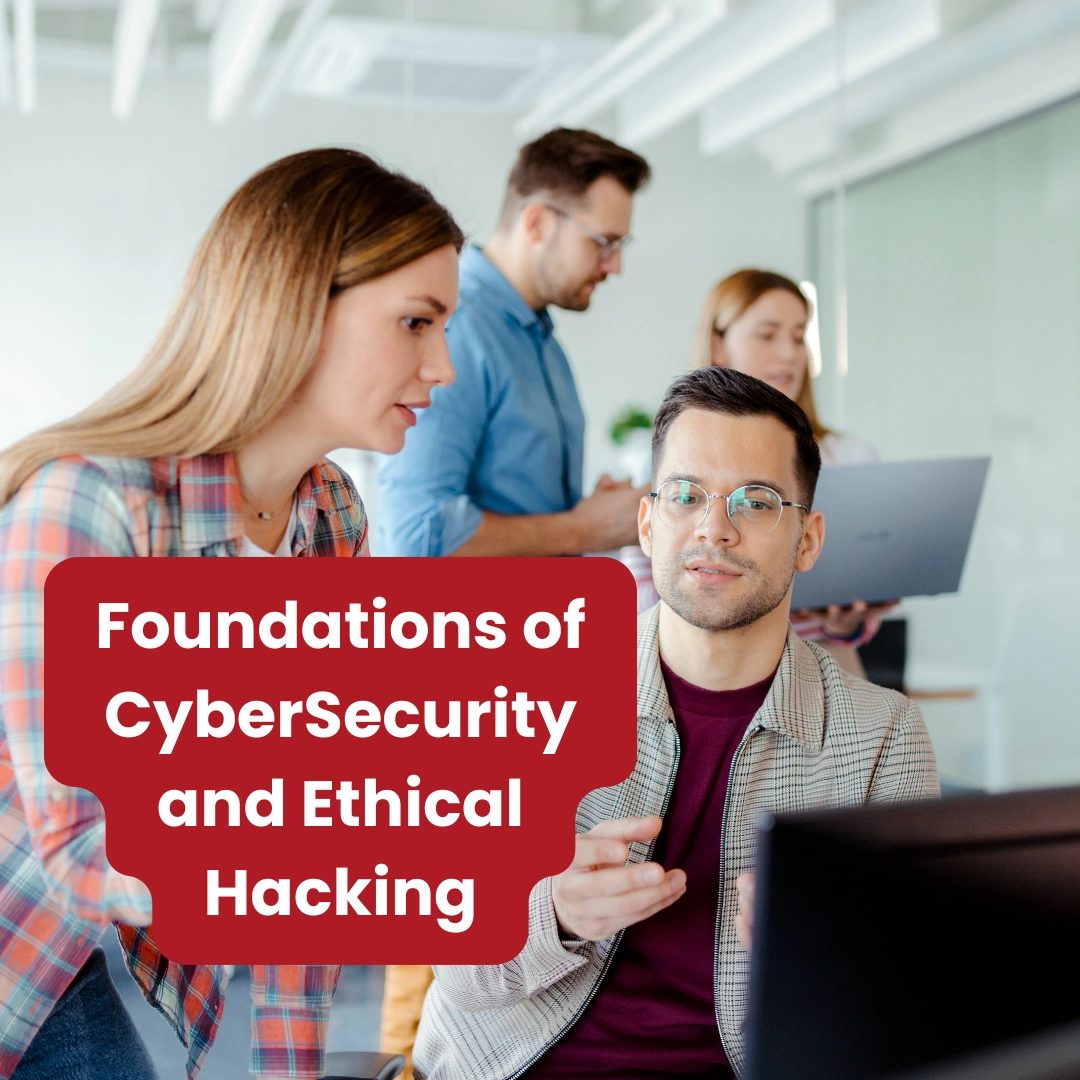
The Foundations of Cybersecurity & Ethical Hacking program at Flashpoint Ignite introduces teens to the world of digital security in a structured, beginner-friendly way. Students learn how cybersecurity works, how ethical hackers identify risks, and how to think through problems like a security professional—while building confidence, responsibility, and real-world communication skills.
This post breaks down what cybersecurity is, what ethical hacking really means, what students learn in the program (including diagnostics and methodology), and why it’s such a valuable experience for teens in Ontario, especially in London and Toronto.
What Is Cybersecurity (In Real-Life Terms)?
Cybersecurity is the practice of protecting computers, networks, and data from digital threats.
These threats can affect individuals, schools, businesses, and even governments. They include:
Stolen passwords and account takeovers
Phishing scams that trick people into clicking fake links
Malware and viruses that damage systems or steal data
Data breaches that expose private information
Identity theft and financial fraud
Unauthorized access to systems and networks
Cybersecurity professionals work to prevent these threats, detect problems early, and respond effectively when something goes wrong.
For teens, cybersecurity learning has two huge benefits:
It builds future career skills in a high-demand field
It allows them to explore techniques and teamwork in this industry without fully immersing themselves in a college program
It allow them to learn competence and a foundation for future cyber learning
What Is Ethical Hacking (And What It’s NOT)?
Ethical hacking is the legal, responsible practice of testing systems to find weaknesses—so they can be fixed before criminals exploit them.
Ethical hackers are sometimes called:
White-hat hackers
Penetration testers
Security analysts
The key word is ethical. Ethical hacking always involves:
permission
Responsibility
documentation
a focus on protection, not harm
This is important because many teens hear the word “hacking” and think it means breaking rules. In reality, ethical hacking is about improving security and helping systems become safer.
Why Cybersecurity Is a Smart Skill for Ontario Teens
Ontario is home to industries that rely heavily on secure systems every day:
Finance and banking (especially in Toronto)
Healthcare and hospitals
Schools and universities
Retail and e-commerce
Government services
Sports and entertainment platforms
In Toronto, cybersecurity connects directly to the tech ecosystem, startups, and major employers. In London, cybersecurity awareness supports growing innovation and healthcare-related industries that depend on secure networks and protected data.
For teens, learning cybersecurity builds core strengths like:
critical thinking
Problem-solving
logical reasoning
attention to detail
curiosity and persistence
digital responsibility
Even students who never pursue cybersecurity as a career benefit from stronger online awareness and safety.
What Students Learn in Foundations of Cybersecurity & Ethical Hacking
Flashpoint Ignite’s approach is designed to be engaging, structured, and accessible for teens—even beginners. Students learn how to understand problems, investigate issues, and apply cybersecurity thinking in a way that’s safe and age-appropriate.
Here are the major learning outcomes:
1) Cyber Ethics and Responsible Decision-Making
Cybersecurity is powerful knowledge. That’s why the program emphasizes ethics from the beginning.
Students learn:
why cybersecurity exists
what “permission” means in a digital environment
how responsible professionals think
the difference between curiosity and harmful behavior
how to use knowledge to protect—not exploit
This foundation helps students build strong character and accountability, which is essential in any future tech pathway.
2) Understanding How Systems and Networks Work (Beginner-Friendly)
Before students can understand cybersecurity, they need to understand the basics of what they’re protecting.
Students explore concepts like:
how devices communicate
what networks do
how information moves between systems
why certain systems are more vulnerable than others
This helps students develop a “big picture” understanding—so cybersecurity becomes logical, not mysterious.
3) Common Threats: Phishing, Malware, and Social Engineering
Cybersecurity isn’t only about code. Many attacks target human behavior.
Students learn about real-world threats such as:
phishing emails and fake websites
suspicious links and downloads scams that target teens and families
social engineering (manipulation tactics used by attackers)
how small mistakes can create big risks
This part of the program is extremely practical because students can apply it immediately to protect their own accounts and devices.
4) Exploring Careers in Cybersecurity and Ethical Hacking
Students as part of this program will receive at minimum 2 career talks from professionals in the industry who will give them an overview of what life is really like protecting networks and computer systems
5) Diagnostic Techniques: Learning How to Investigate Problems
One of the most valuable skills students gain is learning how to diagnose issues like a cybersecurity professional.
Instead of guessing, students practice diagnostic thinking, such as:
identifying what the problem is
noticing patterns and clues
narrowing down possible causes
checking assumptions
separating facts from opinions
documenting what they observe
This is a major mindset shift for teens because it teaches them how to approach challenges calmly and logically—skills that apply to school, work, and life.
6) Following a Methodology (Step-by-Step Cyber Thinking)
In real cybersecurity work, professionals follow a methodology so investigations are consistent, repeatable, and reliable.
Students learn to follow structured steps like:
Define the issue clearly Gather information and evidence
Test possible explanations
Document findings
Recommend next steps or solutions
This matters because it teaches students to think in a professional way—not just “try random things until something works.”
Learning methodology builds strong habits in:
organization
critical thinking
Decision-making
professionalism
And it makes students more confident because they have a process to follow.
7) Communicating Findings to Non-Technical Peers
One of the most overlooked (and most important) cybersecurity skills is communication.
In real workplaces, cybersecurity professionals often explain risks to people who are not technical—like teammates, managers, clients, or parents. Being able to translate technical findings into clear language is what makes someone effective.
Students learn how to:
summarize what happened in plain language
explain why something is risky
recommend practical next steps
present findings clearly and confidently
communicate without overwhelming or confusing others
This is a huge advantage for teens, because communication skills are what help students succeed in presentations, interviews, and leadership roles—especially in competitive environments like Toronto.
Who This Program Is For (And Why Beginners Thrive)
Many teens assume cybersecurity is only for advanced coders or “computer geniuses.” That’s not true.
This program is great for teens who are:
curious about technology
interested in how things work
into gaming, strategy, or puzzles
motivated by problem-solving
exploring future career options
excited by modern, real-world skills
Students do not need to have experience coding to benefit. A beginner who is curious and willing to learn can thrive—because the program is built to teach foundations properly.
Summer break is often seen as a time to relax, recharge, and step away from school routines. But for many families in Ontario—Summer is also an opportunity to do something meaningful: build confidence, develop career skills, and explore future pathways. That’s where structured, hands-on summer programs like Flashpoint Ignite can make a real difference.
Unlike traditional summer camps or purely academic summer school, career-focused youth programs bridge the gap between classroom learning and real-world readiness. They help teens discover what they’re good at, learn how to collaborate, and practice practical skills that can be used in school, part-time jobs, and future careers.
If you’re a parent looking for a summer program in Ontario, or a teen searching for something that feels relevant and exciting, here’s why programs like Flashpoint Ignite are one of the best investments you can make this summer.
The Problem: Teens Aren’t Always Taught “Life Skills” in School
Ontario schools do a great job teaching core subjects like math, science, English, and history. But many students still graduate without hands-on practice in areas like:
Making the leap from student to professional
Time management and employer expectations
Different facets of Leadership and supporting others
Creative Career exploration tied to specific sectors
Confidence in public speaking
And that’s not anyone’s fault—it’s simply difficult to teach all of that within a standard school schedule.
That’s why the summer months are such a powerful time to build these skills in a low-pressure environment. Teens can try new things, learn by doing, and gain clarity about what they want to pursue.
What Makes Flashpoint Ignite Different?
A strong summer program isn’t just about “keeping teens busy.” The best programs are structured around outcomes—real skills, real confidence, and real growth.
Flashpoint Ignite is built around helping teens develop:
Career readiness
Leadership skills
Practical, hands-on learning
Confidence and independence
Community and teamwork
For students in London, Ontario and Toronto, this kind of experience can be especially valuable because both cities have growing career opportunities in tech, sports leadership, business, and skilled professions. Early exposure matters.
Real-World Experience Without the Stress of “Getting It Perfect”
One reason teens often hesitate to try new programs is fear of failure. They worry they won’t be “good enough” or that they’ll look awkward in a new environment.
A well-designed program flips that script. Instead of demanding perfection, it encourages progress.
Flashpoint Ignite creates an environment where teens can:
Ask questions freely
Learn at their pace
Collaborate with peers
Try new skills without judgment
Build confidence through practice
This kind of growth mindset matters—because confidence is not something teens either have or don’t have. It’s something they build.
Why Ontario Parents Are Prioritizing Career-Focused Summer Programs
Across Ontario, families are increasingly looking for summer programs that offer more than recreation. They want something that helps their teens prepare for real life—especially with competitive post-secondary pathways and a fast-changing job market.
The reason is simple: students who build professional skills early tend to feel more prepared, more confident, and more motivated when they return to school in September. Whether they are interested in Medicine, IT or Sports, there is plenty of opportunity to begin career exploration.
The Long-Term Benefits: Confidence + Direction
One of the biggest challenges teens face today is not knowing what they want to do. That uncertainty can lead to anxiety, low motivation, and a sense of falling behind.
A program like Flashpoint Ignite helps students develop direction by giving them exposure to real topics and real skills. Instead of guessing what a career might be like, they get to experience it in a guided environment.
Even if a teen doesn’t discover their “forever career,” they will still gain:
Better communication skills
Stronger teamwork habits
Increased self-awareness
Confidence speaking to adults and peers
A clearer understanding of their strengths
Why London and Toronto Are Great Cities for Teen Career Growth
Both London and Toronto offer unique advantages for youth development:
London, Ontario
London is known for strong education and growing opportunities in healthcare, business, and tech. It’s a great environment for teens to build skills and connect with supportive communities.
Toronto, Ontario
Toronto is Canada’s largest city and a hub for tech, business, entrepreneurship, and innovation. Teens in Toronto benefit from exposure to modern career paths and future-focused skills.
Flashpoint Ignite fits perfectly into both environments by helping teens develop skills that apply anywhere—no matter what they choose next.
Final Thoughts: A Summer That Actually Moves Them Forward
A great summer program isn’t about being busy. It’s about coming out the other side stronger.
Flashpoint Ignite offers Ontario teens a chance to develop confidence, explore careers, build real-world skills, and return to school with momentum.
If you’re looking for a meaningful summer experience in London or Toronto, Flashpoint Ignite is exactly the kind of program that helps teens grow into capable, confident young adults.
Ready to learn more? Visit Flashpoint Ignite and explore programs designed to help teens build skills, confidence, and career readiness in Ontario.
Many students believe confidence is something you either have or don’t. They look at confident peers and assume it’s personality-based — something natural, effortless, and out of reach.
But when it comes to careers, that belief couldn’t be more misleading.
Career confidence is not about being loud, outgoing, or fearless. It’s about competence — knowing you can handle challenges, learn quickly, and respond effectively when things don’t go perfectly.
And here’s the most important part: You don’t need a job to start building career confidence.
You can start long before you ever submit your first application.
The Real Source of Career Confidence
Confidence doesn’t come from reassurance or motivation alone. It comes from evidence.
Students feel confident when they’ve:
Tried something challenging
Figured things out
Made mistakes and recovered
Seen themselves improve
This is why confidence grows through experience, not intention. Telling yourself to “be confident” rarely works. Doing confidence-building work does.
Career confidence is the result of repeatedly proving to yourself that you are capable.
What Is Career Competence?
Career competence is the ability to function effectively in real-world professional environments. It includes:
Communication
Problem-solving
Teamwork
Time management
Professional behaviour
Competence answers the question: “Can I handle this?”
When students develop competence, confidence follows naturally.
Why Many Students Feel Unprepared for Their First Job
It’s common for students to feel anxious before their first job, interview, or professional opportunity. This anxiety usually comes from uncertainty, not inability.
Students often worry:
“What if I don’t know what to do?”
“What if I say the wrong thing?”
“What if I make a mistake?”
These fears exist because students haven’t had enough chances to practice professional skills in low-risk environments.
School builds academic knowledge. Career confidence is built by applying skills, not just learning about them.
The Key Skills That Build Career Confidence
1. Communication Competence
Being able to communicate clearly is one of the fastest ways to build confidence.
This includes:
Introducing yourself professionally
Asking questions without fear
Explaining your thinking
Writing clear messages
Speaking up in group settings
When students know how to communicate, uncertainty decreases. Confidence increases because they can express themselves effectively.
2. Problem-Solving and Decision-Making
Confidence grows when students learn how to approach problems rather than avoid them.
Problem-solving competence includes:
Breaking problems into smaller parts
Asking clarifying questions
Trying solutions and adjusting
Learning from outcomes
Students who practice problem-solving don’t panic when challenges arise — they engage.
3. Teamwork and Collaboration
Most jobs involve working with others. Students gain confidence when they learn how to:
Contribute ideas
Listen respectfully
Navigate disagreements
Share responsibility
Knowing how to work in a team reduces fear of group environments and builds trust in one’s ability to contribute.
4. Professional Behaviour and Reliability
Confidence also comes from knowing how to behave professionally.
This includes:
Being on time
Following through on commitments
Managing responsibilities
Communicating progress
Students who are reliable feel confident because they know they can be trusted — and trust is foundational to success.
Why Competence Must Come Before Confidence
Many students wait to feel confident before trying something new. In reality, the order works the other way around:
Try → Learn → Improve → Gain confidence
Avoiding challenges delays confidence. Engaging with challenges builds competence.
Career confidence isn’t about avoiding mistakes — it’s about knowing how to respond when they happen.
The Power of Safe Practice
One of the biggest barriers to career confidence is fear of failure. Students worry that mistakes will define them.
This is why safe practice environments are essential.
Programs like Ignite are designed to:
Simulate real-world expectations
Provide structure and guidance
Allow mistakes without long-term consequences
Offer feedback and reflection
Students learn that mistakes are part of growth — not proof of failure.
How Ignite Helps Students Build Confidence Through Competence
Ignite programs focus on doing, not just discussing.
Through hands-on experiences, students:
Communicate with peers and facilitators
Solve real-world challenges
Practice leadership and teamwork
Receive feedback
Reflect on their progress
Each experience adds evidence: “I’ve done this before. I can handle this.”
That evidence becomes confidence.
How Students Can Start Building Career Confidence Right Now
Students don’t need to wait for a job to start building competence. They can begin by:
Participating in experiential learning opportunities
Taking on responsibility in group projects
Practicing professional communication
Asking for feedback
Reflecting on growth
Small steps compound quickly.
Why Teachers and Schools Play a Critical Role
Teachers see students daily — often before students see themselves as capable professionals.
By encouraging experiential learning, reflection, and skill development, educators help students build confidence that grades alone cannot provide.
Career readiness isn’t an add-on. It’s a foundation.
Final Thought: Confidence Is Built, Not Given
Career confidence doesn’t come from luck, personality, or perfect preparation. It comes from competence built through experience.
Students don’t need to know everything before their first job. They need to trust their ability to learn, communicate, and adapt.
That trust is earned — one experience at a time.
And the best time to start building it is before the first application is ever submitted.
Introducing Flashpoint Career Start Essentials: An Employment Readiness Program for Teens
Flashpoint offers a summer program for 14-17 year olds to help students prepare for their first job and practice key skills like self-confidence in a safe setting.
Check out this key Job Readiness Summer Program/Camp to help your teen build their job readiness and self-confidence.
Becoming a Professional Starts Long Before Your First Job
Many students believe that becoming a “professional” happens automatically after graduation or once they land their first job. They imagine professionalism as something tied to age, job titles, or workplace uniforms.
In reality, the shift from student to professional has very little to do with age — and everything to do with mindset.
Professionalism is not something that magically appears on your first day of work. It’s a way of thinking, communicating, and taking responsibility that develops over time. The earlier students begin practicing this mindset, the more confident and capable they become when real opportunities arrive.
The most successful young professionals don’t wait to be told how to act in the workplace. They start thinking like professionals before they ever apply for a job.
What Does “Professional Mindset” Actually Mean?
A professional mindset is not about knowing everything or pretending to be someone you’re not. It’s about how you approach learning, responsibility, and relationships.
Professionals:
Take ownership of their actions
Communicate clearly and respectfully
Manage expectations
Respond constructively to feedback
Understand that their behaviour affects others
Students often focus on what they need to learn. Professionals focus on how they show up while learning.
This shift changes everything.
The Biggest Difference Between Student Thinking and Professional Thinking
Student Thinking
“Is this good enough to pass?”
“What do I need to do for the mark?”
“Tell me exactly what to do.”
“I’ll fix it if I get in trouble.”
Professional Thinking
“Does this meet the standard?”
“How can I improve this?”
“What’s the best approach?”
“How will this affect others?”
Neither mindset is wrong — they simply serve different environments. School rewards completion. Work rewards quality, initiative, and accountability.
The earlier students practice professional thinking, the smoother their transition becomes.
Mindset Shift #1: From Doing Tasks to Taking Responsibility
One of the biggest mindset shifts is moving from task completion to responsibility ownership.
In school, success often looks like:
Completing assignments
Meeting deadlines
Following instructions
In professional environments, success looks like:
Understanding expectations
Anticipating needs
Communicating progress
Taking responsibility for outcomes
Professionals don’t wait to be chased. They follow up. They ask clarifying questions. They take ownership — even when something goes wrong.
This shift builds trust quickly.
Mindset Shift #2: From Being Taught to Actively Learning
Students are used to structured learning: lessons, assignments, tests. In professional settings, learning is often self-directed.
Professionals:
Ask questions without being prompted
Seek feedback
Learn from observation
Reflect on mistakes
Employers value students who show curiosity and a willingness to learn far more than those who try to appear “perfect.”
A professional mindset says: I don’t know everything — but I’m responsible for learning.
Mindset Shift #3: From Informal to Intentional Communication
Communication is one of the clearest markers of professionalism.
Professional communication doesn’t mean sounding formal or stiff. It means being clear, respectful, and intentional.
This includes:
Writing emails with purpose
Speaking clearly in groups
Listening without interrupting
Adjusting tone based on audience
Students who learn to communicate professionally early gain confidence quickly. They are taken more seriously — not because of age, but because of clarity.
Mindset Shift #4: From Avoiding Feedback to Using It
Many students see feedback as criticism. Professionals see feedback as information.
A professional mindset understands that:
Feedback is part of growth
Mistakes are expected
Improvement matters more than perfection
Students who can receive feedback calmly, ask follow-up questions, and apply suggestions stand out immediately in workplaces.
This skill alone can accelerate career growth.
Mindset Shift #5: From External Motivation to Internal Standards
In school, motivation often comes from grades, deadlines, or consequences. In professional environments, motivation must be internal.
Professionals ask:
“Is this something I’m proud of?”
“Does this reflect my standards?”
“What’s the impact of my work?”
This internal shift builds confidence, independence, and credibility.
Why This Mindset Shift Matters So Much for Students
Students who develop a professional mindset early:
Feel more confident in new environments
Adapt faster to workplace expectations
Communicate more effectively
Handle responsibility with less stress
Instead of feeling overwhelmed by adult expectations, they feel prepared.
This mindset doesn’t remove challenges — it makes students capable of handling them.
How Ignite Helps Students Practice Professional Thinking
Ignite programs are intentionally designed to help students practice professional behaviours before the stakes are high.
Through experiential learning, students:
Work in teams
Communicate ideas clearly
Manage responsibilities
Receive and apply feedback
Reflect on their growth
These experiences allow students to try on professionalism — not in theory, but in action.
By the time students face interviews, internships, or first jobs, the mindset is already familiar.
How Students Can Start Making the Shift Now
Students don’t need a job title to begin thinking like professionals. They can start by:
Taking ownership of commitments
Communicating clearly and respectfully
Asking thoughtful questions
Reflecting on feedback
Holding themselves to higher standards
Small changes in mindset create big changes in confidence.
Final Thought: Professionalism Is a Skill — Not a Switch
Becoming a professional isn’t something that happens overnight or after a single milestone. It’s a mindset built through practice, reflection, and responsibility.
Students who begin making this shift early don’t just prepare for their first job — they prepare for every opportunity that follows.
Professionalism isn’t about pretending to be someone else. It’s about becoming the most capable version of yourself.